The Beach and Other Stories

Contemporary Tropisms

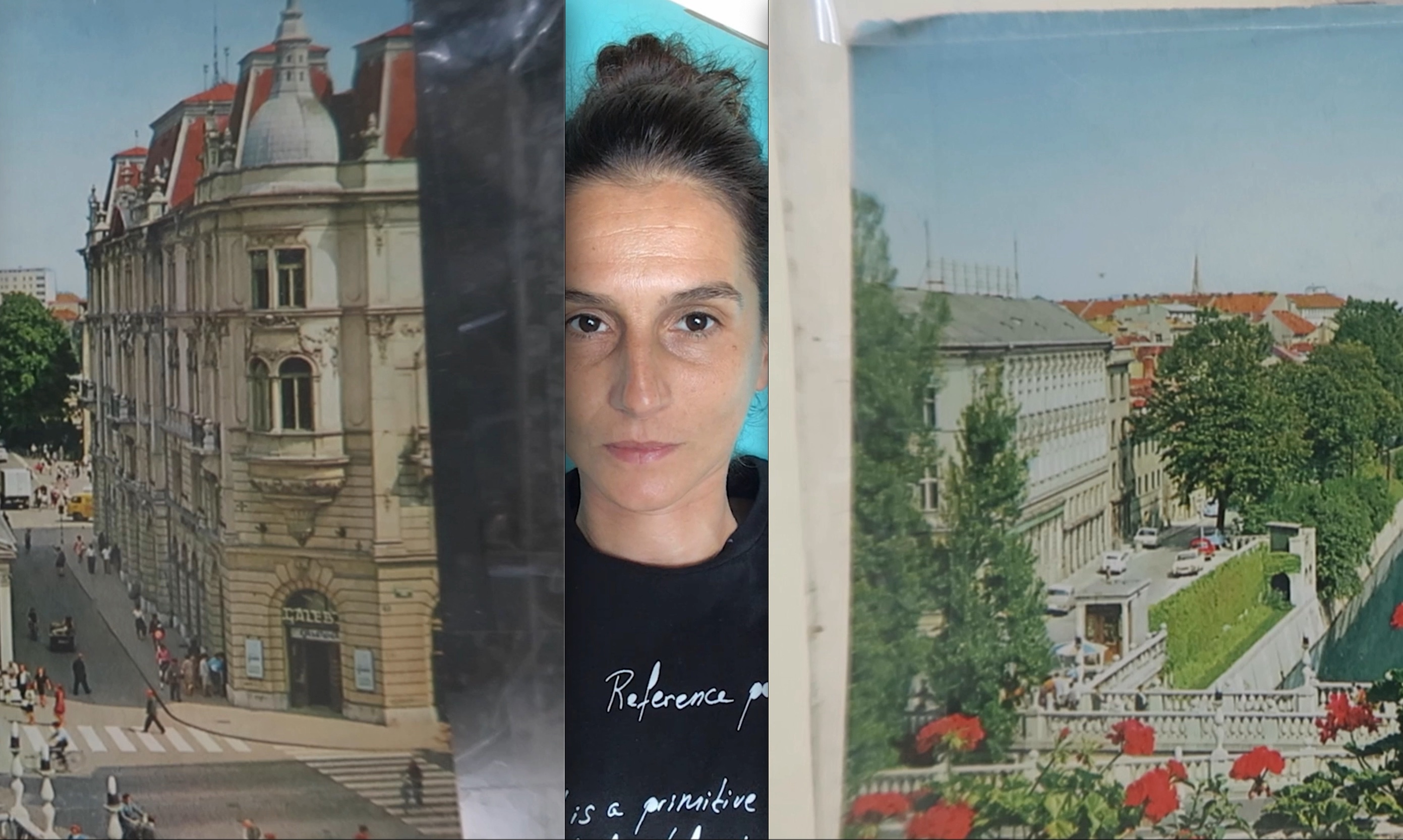
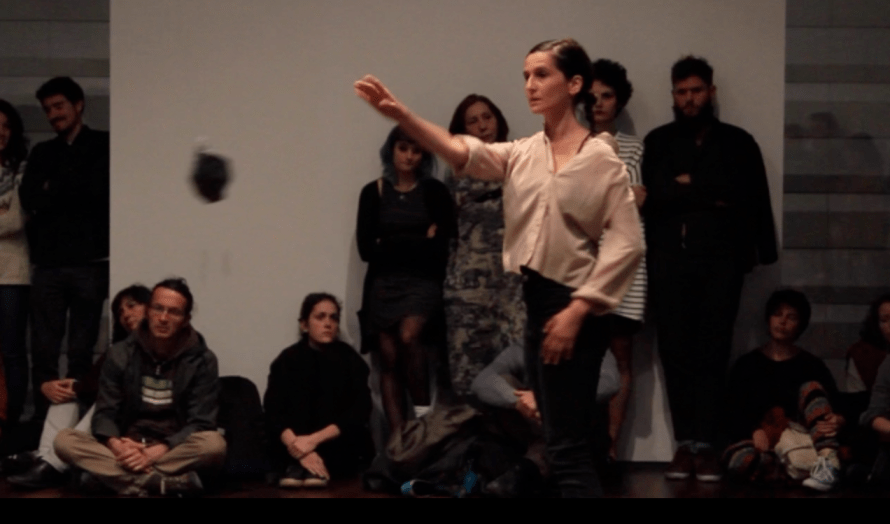
At home or in public space, images are everywhere. They seduce the eye, blur our shared stories and orient our future. For choreographer and dancer Maria Kefirova, they are rivers of meaning that a mere gesture of tenderness can reactivate. The Beach and Other Stories is a solo piece about photographic infiltration, that it is created in full complicity with the audience.

Somewhere between a neighborhood alley and a darkroom, a storyteller short-circuits the suggestive power of images, recasting our imaginary worlds and rewriting our stories. She lets herself drift from one photograph to another, slips among the various protagonists, comments, laughs, and recounts her own story. Her gestures and words flow along a current that runs freely, activating our sightlines, our memories, the material before us: a jubilant dance inspired by fiction, a rediscovery of the graceful art of play.
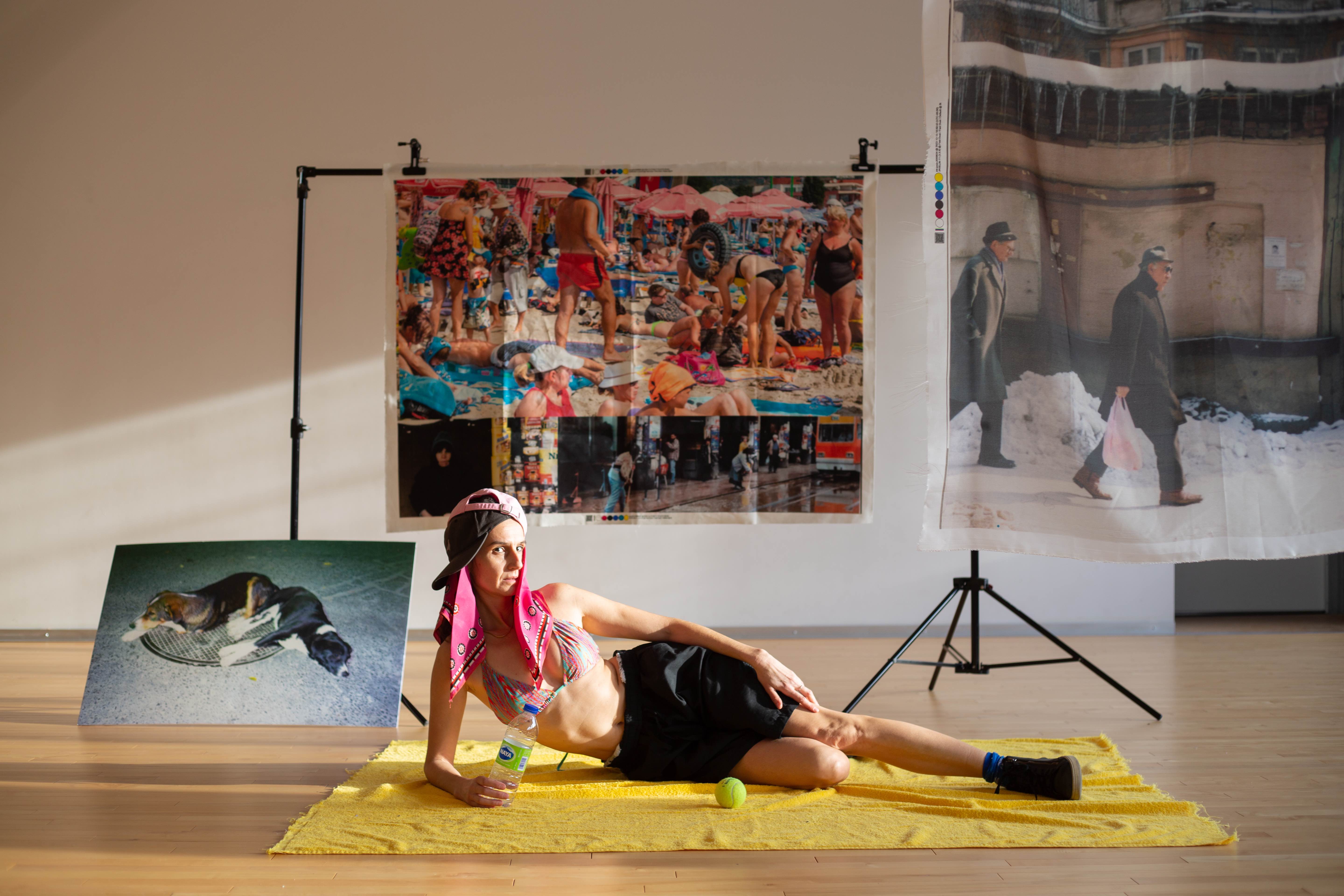
pic. Kinga Michalska

Concept, choreography and performance: Maria Kefirova, Text: Maria Kefirova + Michael Martini, Dramaturgical support: Hanako Hoshimi-Caines, Advisors: Diego Gil + Sophie Corriveau + Sebastian Kann, Lighting Design: Karine Gauthier, Costumes Design: Jade Tong Cuong, Sound Design:  Nicolas Basque + Maria Kefirova, Photos: Bulgarian Visual Archive – Olivier Tulliez
Produced by Danse-Cité, FTA,Maria Kefirova,

Premiered at Festival TransAmériques, on June 2, 2023
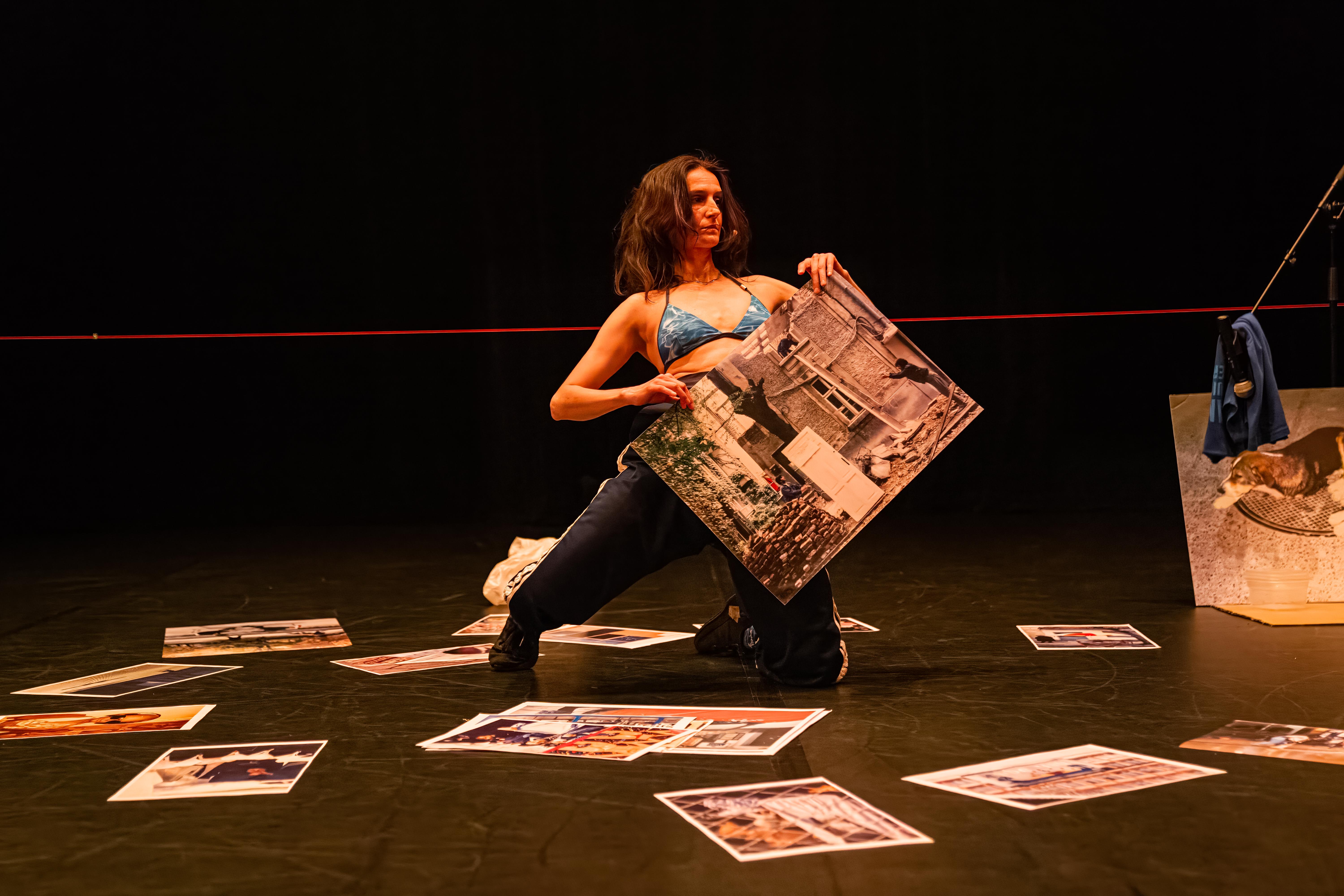
pics: Vanessa Fortin
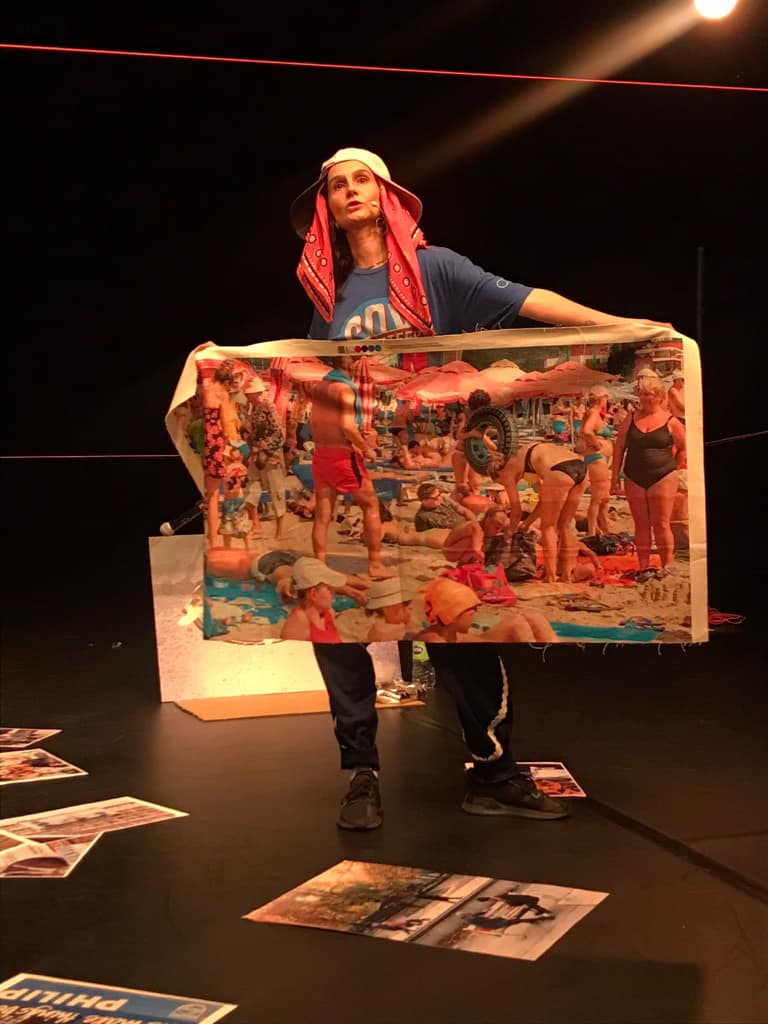
photo: Jade Tong-Coung

Le Meilleur est à venir

Concept and performance Diego Gil and Maria Kefirova

We invite the viewer into a process of slow looking and listening, and a deep tactile experience of gravity. We propose the audience to revitalize and regenerate the perception of their own body while perceiving the set of actions that we deploy. This somatic revitalization happens by allowing the perception to rest while opening it towards the ecology of process happening at the interstices of the body, materials and environment with which we engage.

backs boxes towels

A knowledgeable person stated that the work Packaging/Wrapping by Christo and Jeanne-Claude, artists known for their large-scale, site-specific environmental installations, was a sort of premonition for the fact that in the center of our existence there is nothing but emptiness.

I am not sure about that. Actually, maybe, in the middle of it all, there is sound, a buzz, a whoosh, a blopp, a crack.

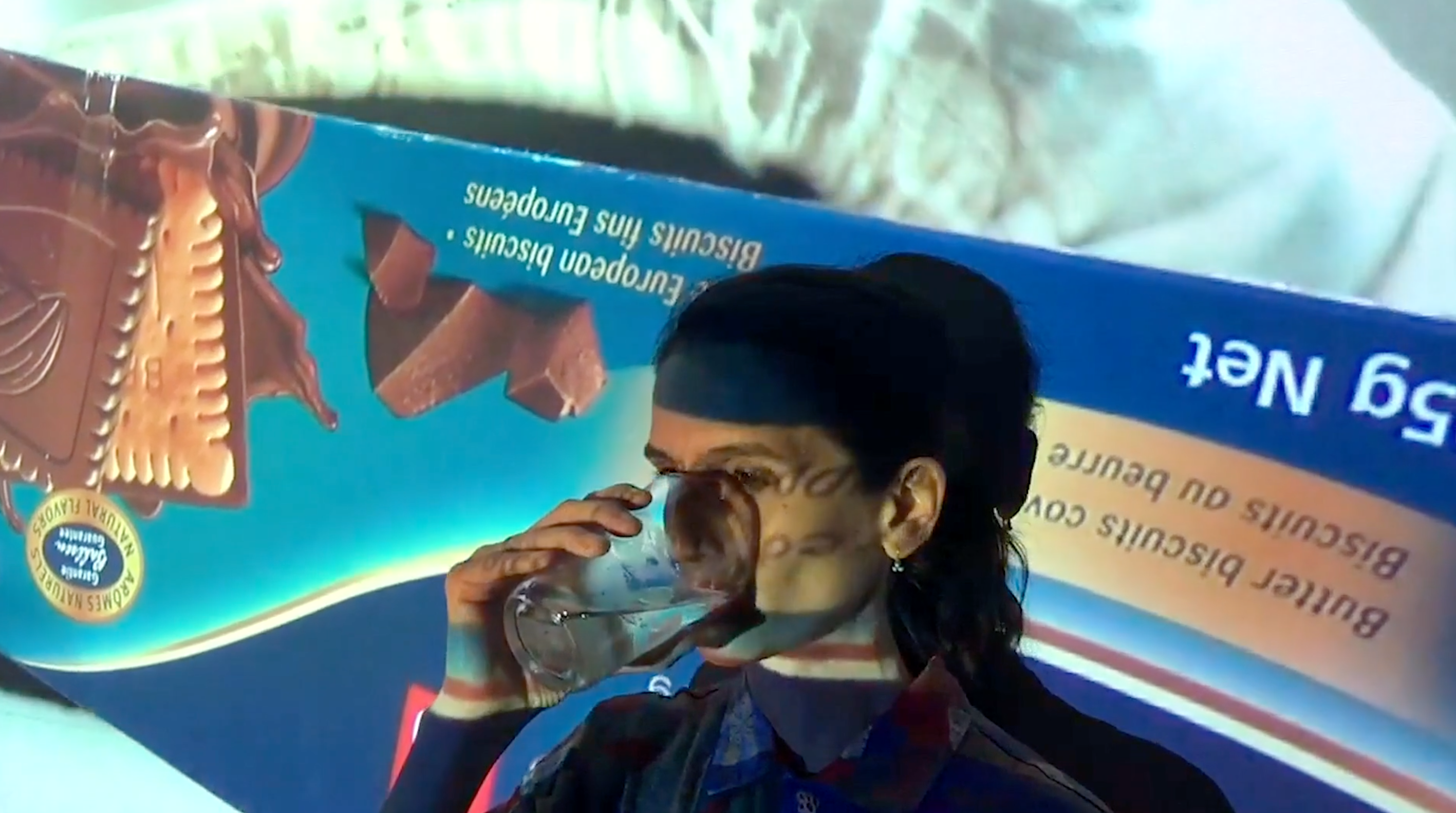
backs boxes towels began as a search for sensation. Kefirova’s performance departs from this desire to build space through physicality and to make sound visible. The work follows her curiosity towards the concept and embodiment of friction and develops through techniques for exteriority involving national anthems, straws, boxes, towels, respect for the ‘backspace’, wallpaper, as well as minimal and maximal dancing.

Skins rub screens. Boxes fill with sounds. Bodies become towels.

pic. Johan Deschuymer

Choreography, performance, video and drawings: Maria Kefirova | Lighting Design: Paul Chambers | Sound Design: Guillaume Létourneau, Maria Kefirova | Set Design: Johan Deschymer, Maria Kefirova | Costumes: Jade Tong-Coung | Dramaturgical support and outside eye: Diego Gil, Hanako Hoshimi-Caines | Outside eye: Noémie Solomon | Visual design consultant: Johan Deschuymer. A co-production of DNK- space for contemporary dance and performance and MAI, with the support of MAI’s residency.

Soundseeing

Sound is a wonderful space.

‘Soundseeing’ departs from an erotic feeling towards sound and space; from a desire to become sound and space, to tune to the same frequency the singular and the plural.

This video work composes with a collection of divers sounds and shifts of presence and attention.

Session 26

Session  26 at Dazibao was an opportunity to share and reflect on some of the video annexes of my performance making.

I can’t really separate the video making from the dance making. They are two different articulations of the same ongoing process of modulating distance and proximity, fracturing time and space, opening gaps for different access to reality, for shifts of perception.

Of course, as a dancer, I am uneasy with the O Mighty power of the smooth visual image. The fact that I have such a pleasure working with video is a paradox. Maybe I do it because it helps me to disrupt the usual input-output relations of sound, movement, and image, of matter and fact, of absence and presence, of touch and illusion of touch, and because it gives me a sense of absorption.”

The Book of points I

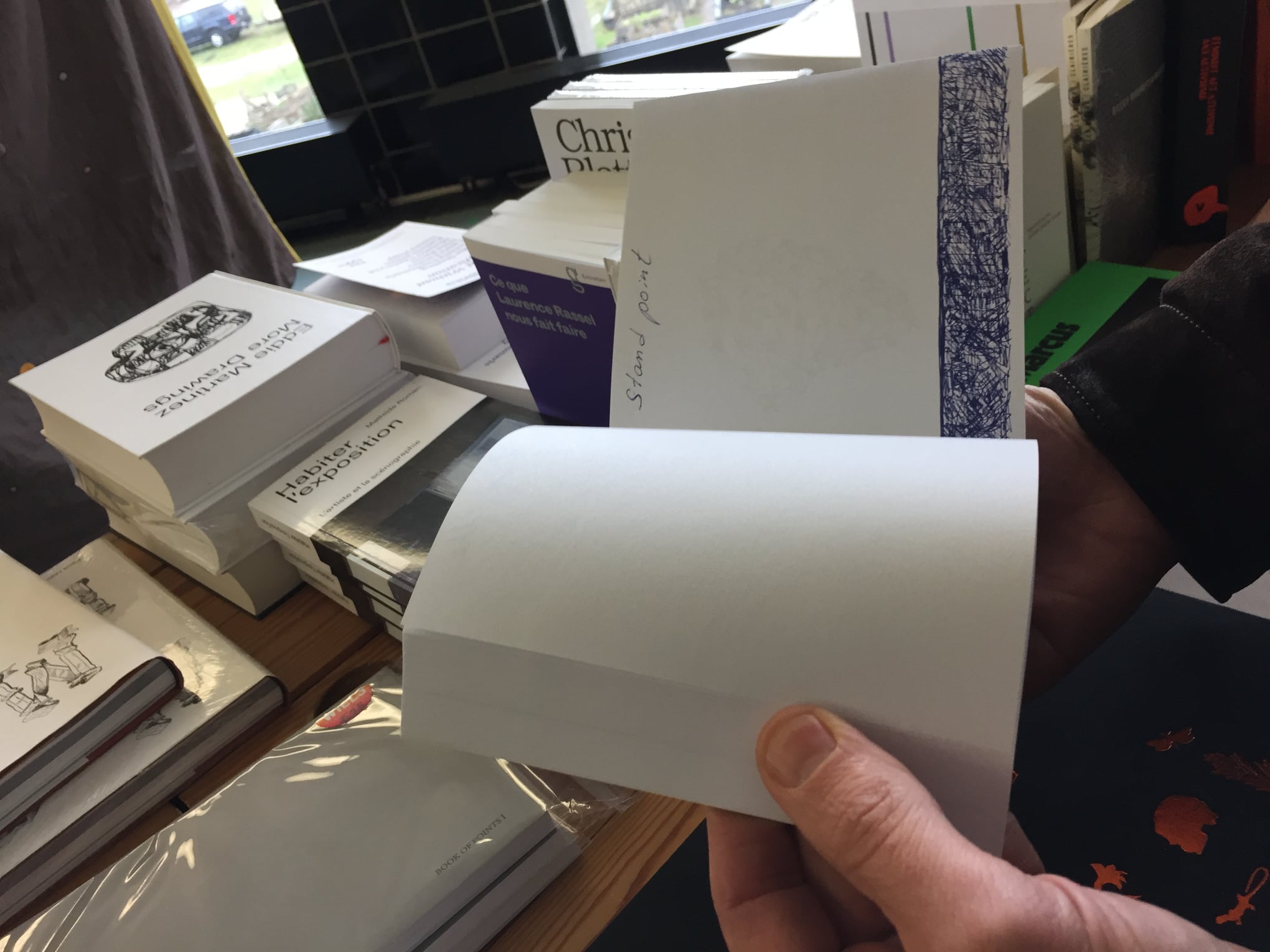
During a long period of time, I sit in front of a blank page with the intention to make a point.

Then I make the Point.

The rule for my pointing process is simple:

a) I sit and let a desire, for making a specific point, come to surface.

b) I ‘call’ the point by writing its name on a white page (ex: melting point, critical point, meeting point, burning point, still point, dead point, last point, red point, resolution point etc.)

 c) I go to the point using different systems of representation.

During this process of making points, I was committing to spontaneity, immediacy, accumulation, difference, persistence, repetition, exhaustion, and renewal. The book feeds from the uniqueness and complexity of each ‘present’ moment and dances with the question: How to create meaning?

The Book of points 1 can be purchased. If you would like to have a copy, let me know: mariakefirova@gmial.com.

And this is the video alternative:

2024_MANUAL FOR MEASURING DISTANCE

palm

Manual for measuring distance came as a secondary effect of my choreographic process, inquiring into distance, proximity, and their limits as generative technique for new forms of content and structure.

The work addresses the body of the reader and the body of the space. It tries to measure and recompose those bodies; it searches to open space for the enfolding of asymmetries of presence and attention.

While making the Manual, I realized that for me to ‘measure’ means to ‘know better’ and make alive the measured thing or space. 

The work composes with the superposition and  accumulation of different  view points, points of contact, and points of reference. It  tries to document but instead makes poetry out of the practices through which I developed two performance pieces: measuring distance and backs.boxes.towels (Dance cure). 

Manual for measuring distance

cold cuts

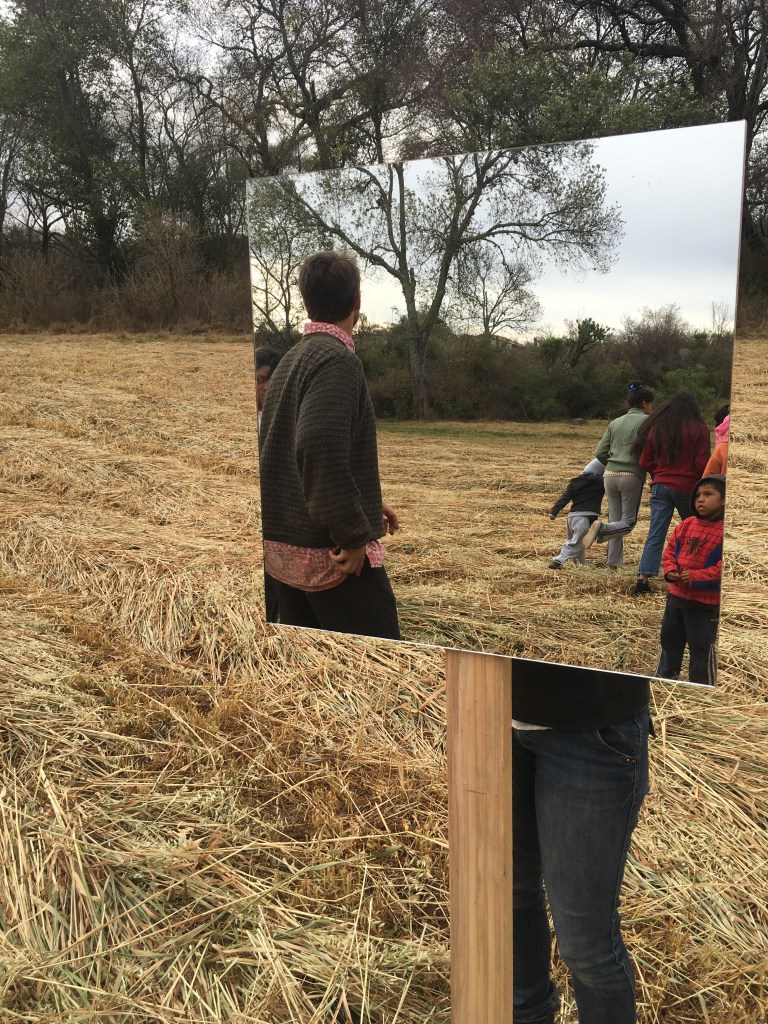
Get closer to yourself at this path for self reflections: MAKE A SELFIE!

Landscapes change, people change, minds change but You are always going to be You.

A performative installation at The Guapamacátaro Center for Art and Ecology.

with Sameena Sitabkhan

photographs by Sameena Sitabkhan
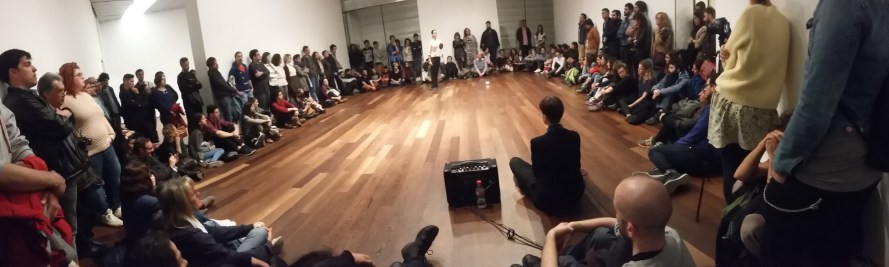
Measuring distance

(with the help of Miguel Melgares, Kelly Keenan, Nikolaos Chandolias)

This piece is not funny. It is about absence and grief, about disconnection, relativity, about negative space, risk and inertia.

This is a piece about shifts of view points, points of contact, and points of reference, about allocentric and egocentric forces, about momentum and about the explosion of inertia.

securedownload-1 20160402_204237-1 12916202_1057692960953574_6805411654752947988_o screen-shot-2016-04-16-at-4-21-21-pm

PHOTO CREDIT: MANUEL NAVARRETE LÓPEZ

The Paradise series : The CLASS

screen-shot-2016-10-10-at-11-23-42-pm

A class that guides the unfolding of a series of extraordinary physical states.

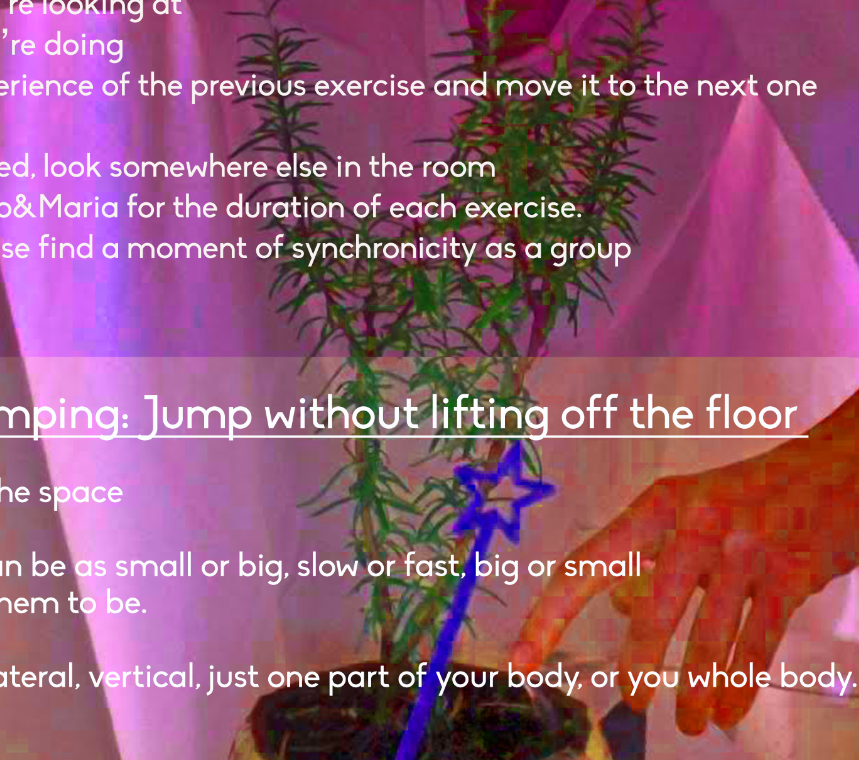
Hanako – Hoshimi Caines and I propose a series of  extraordinary physical states. We create an environment of few spoken words in order to access the space/sense that happens when you are allowed to be without language articulating your experience. Projected indications guide the unfolding of activities in a few simple sentences. They get us sweating, dancing, jumping and stretching for long enough that we enter into that space without worrying or needing to be good in a particular way. The repetition and duration of movements provokes the feeling of synchronicity between the inside and outside and avoids the need to produce an individual creativity. We access fun, adrenaline, concentration, absurdity, pacing, height and transcendence, we practice synchronicity and non synchronicity, repetition, accumulation, listening to feel good music, making space for extraordinary states and sinking in the extraordinary of the ordinary.

screen-shot-2016-10-10-at-11-27-12-pm

THE PARADISE

Concept and performance: Maria Kefirova and Hanako-Hoshimi Caines //Light design: Paul Chambers

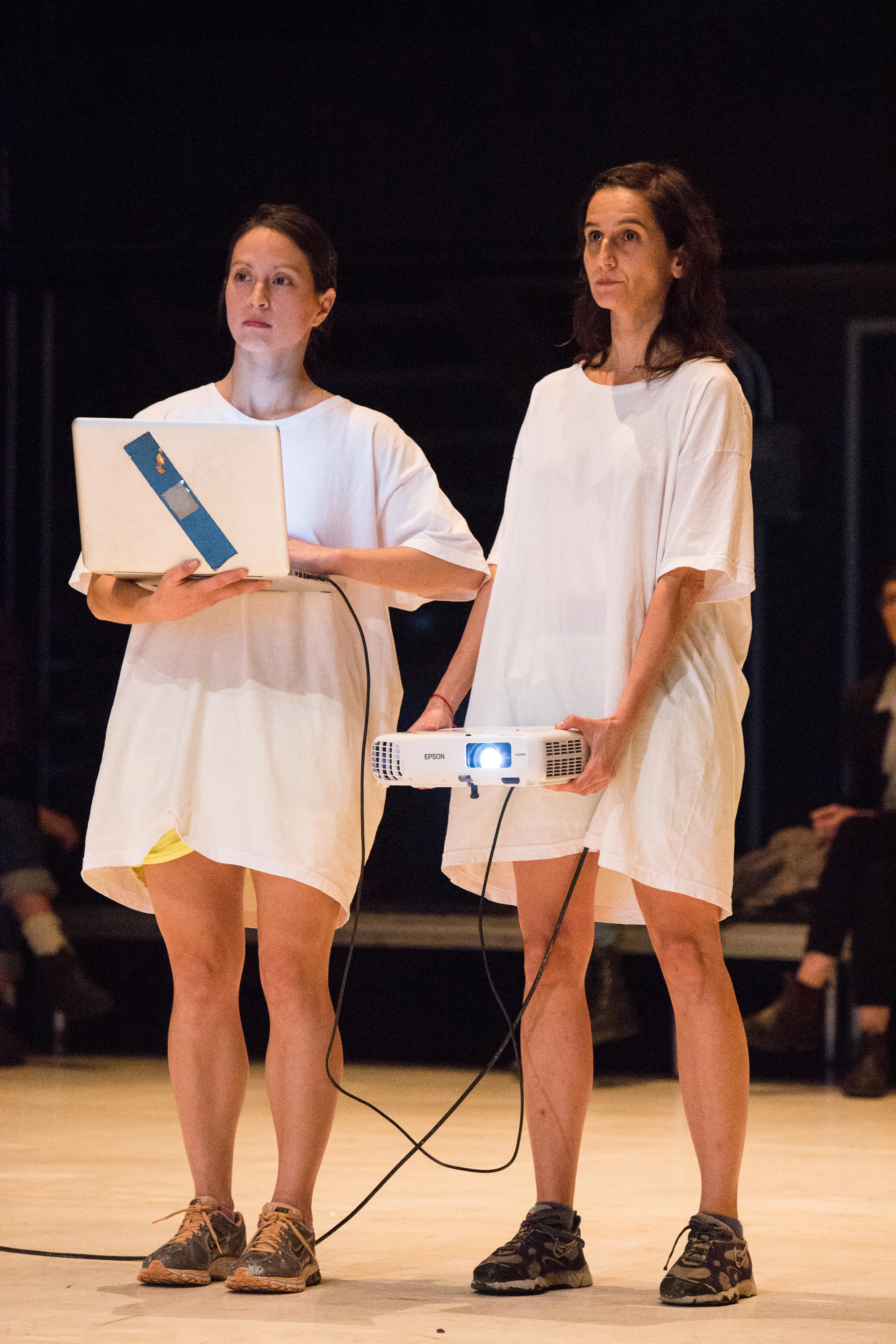
The Paradise is a dance duet that works between the two dimensional ready-made notion of Paradise as pink flamingos, beach side motels, rainbow colored harmony and the task of accessing extraordinary states, which are often far from comfortable and perfect looking. Through a series of unassuming and simple assignments, we are setting up conditions for the emergence of complexity and the production of multiplicity. Today paradise is a movement of synchronicity, a way of looking at and relating to. It is everything that I look upon with care and I spend time with. Paradise is also a movement that does not skip any part of its trajectory: a very alive and effortless state of simultaneously holding on and letting go. Paradise is not getting fixed in meaning, sensation, idea or image but constantly moving through their different nuances. The Paradise does not solicit audience participation but is a system of offering and receiving and the questions that arise from this.19 novembre 201517-The Paradise Maria Kefirova Hanako Hoshimi-CanesF-Chais17719 novembre 201517-The Paradise Maria Kefirova Hanako Hoshimi-CanesF-Chais27with mic

photo by Frederic Chais